

LED vs. Tungsten Stage Lighting: A Small-Venue Comparison
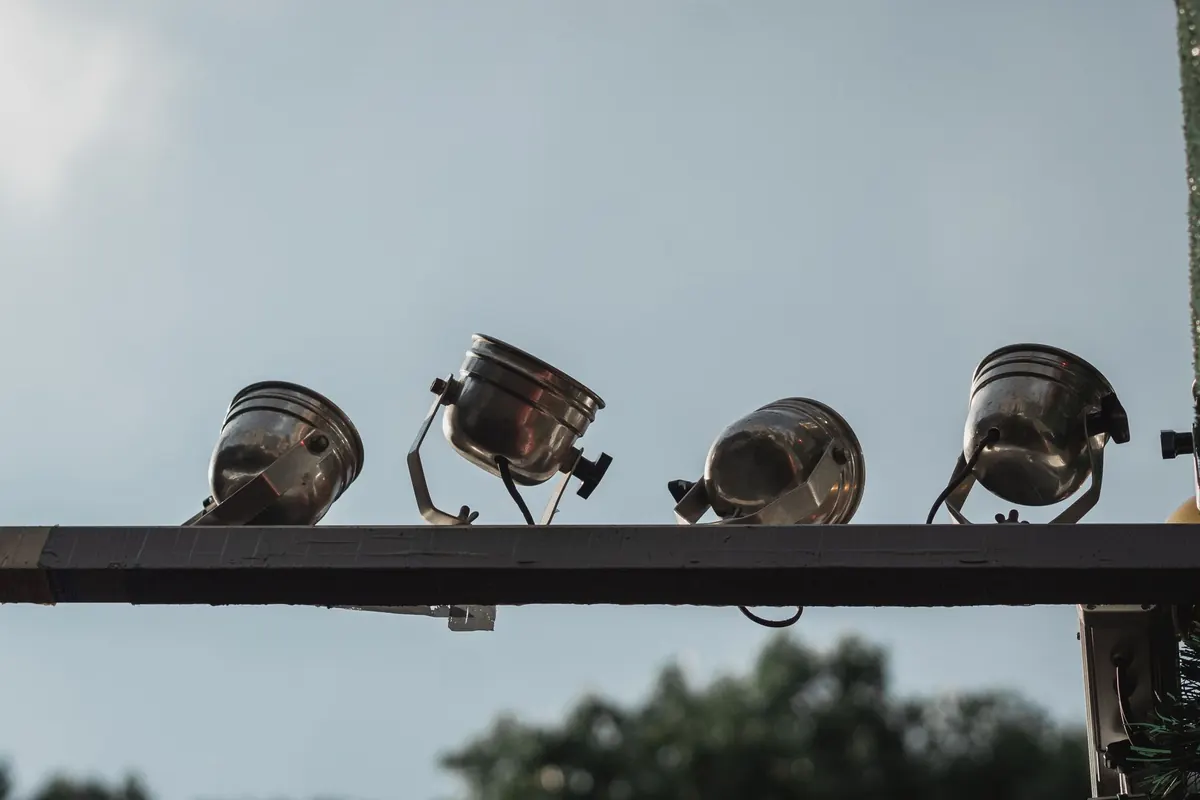
Picture a seventy-seat house with a low grid, twelve dimmer channels and a lighting budget that has to stretch over a decade. Sooner or later somebody asks: do we keep the old tungsten rig or move to LED? It is the sort of decision that gets argued about in the pub after the get-out, usually by people who are right about different things.
There is no universal answer. But the trade-offs are predictable, and once you have weighed them against your own room — ceiling height, power supply, whether anyone films the shows — the choice tends to make itself.
Heat: The Invisible Cost of a Small Room
A tungsten fixture is a very efficient heater that happens to emit light. Most of what a 1kW Fresnel draws leaves the lens as heat and infrared, which is fine in a large house with a high grid and good extraction, and miserable in a converted upstairs space with a 3.2m ceiling.
You feel it in three places. On stage, where the cast are being cooked from eight metres away and the costume department starts asking about fabric. In the room, where the audience notices by the interval. And in the budget, because you are paying to remove that heat again with air conditioning, or paying in complaints if you don't. Gels last longer under LED, colour frames stop warping, and lamps stop being left on during the notes session.
LED fixtures are not cool — they still need to shed heat — but it leaves from the back of the unit rather than the beam. Two consequences matter in a small venue. The beam no longer bakes the set. And cooling means fans, which means noise. In a 60-seat studio where you can hear the audience breathing, fan whine from a cheap fixture hung two metres above the front row is a genuine artistic problem. Ask to hear the fixtures in a quiet room before you buy.
Dimming: Smoothness, Curves and Flicker
Tungsten dims beautifully because it is a resistive load with thermal inertia: turn the voltage down, the filament cools, output falls smoothly, and the colour drifts warmer as it goes. That amber fade to black is a look in its own right.
LED dims electronically. Good fixtures fade smoothly to zero with no colour shift and no visible stepping. Cheap ones flicker at low levels, jump from 8% to nothing, or strobe visibly on camera. The faults are worst exactly where small theatres live: at the bottom of the fader, during a slow blackout, in a quiet moment.
- Fade it to zero in front of you. Take the fixture down over twenty seconds and watch the last 15%. Stepping, colour shift and drop-out all show up there.
- Watch it through a phone camera. Rolling bands appear on screen long before most eyes notice, and that matters if you ever film a show or stream a preview.
- Check the control. A constant-power LED fixture needs a switched supply and DMX, not a dimmer channel. Budget for a data run and a switcher, not just the fixture.
If you keep dimmers for some units and add LED for others, expect to spend an afternoon matching curves. A tungsten fade and an LED fade given the same cue times do not look the same.
Colour: What the Eye and the Camera See
A tungsten lamp is close to a perfect black-body source. Skin looks the way skin has always looked under stage light, gels behave the way the swatch book promises, and the warm shift on dimming reads as natural. That is why so much front light is still tungsten.
LED colour is a different proposition. A white LED is a blue emitter with a phosphor on top, and the spectrum has gaps. Cheap RGB and RGBA fixtures have bigger gaps still: they hit a convincing deep blue but render a face sickly green, or turn a red dress brown. The meter looks acceptable, the camera disagrees, and the argument eats a tech week.
- Ask for a spectral plot, not a single CRI figure. Numbers can be flattering; a plot shows where the energy actually is, especially in the reds.
- Test with real skin, real costumes and a real camera. Bring a colleague, a red shirt and your phone.
- Beware multiple shadows. A multi-chip LED PAR throws several coloured shadows from one unit — glaring on a close white cyclorama, invisible in the shop.
- If you mix technologies, set both to the same nominal white and look at them side by side on a face. "3200K" on a menu is a target, not a guarantee.
Power and Infrastructure
Tungsten is greedy. A 2kW Fresnel on a 230V supply draws roughly 8.7A, and cold-filament inrush can be several times the running current — which is why old dimmer rooms hum and why breakers occasionally let go when you bring up a bar in one go. Add distro, cable, heat in the dimmer room and the floor space the rack occupies, and a tungsten channel costs more than the fixture.
LED cuts that load dramatically and changes the shape of the problem: you need switched power and data at each position rather than a big rack in the corner. In an old building with a limited supply, that alone can decide the question, freeing capacity for sound, projection or a kettle.
Do not do the arithmetic on the back of a cue sheet and then wire it yourself. Have a qualified electrician check supply capacity, earthing and circuit protection before anything new goes up, and check local requirements for heat, ventilation and emergency lighting with the appropriate people.
Budget: Sticker Price and Cost of Ownership
Tungsten wins on day one. Fixtures are inexpensive, the dimmers are probably already there, and lamps are cheap and easy to find. The costs arrive later: lamps are consumable, output falls over life, colour drifts warmer as the filament ages, gels burn through, and someone has to climb a ladder to deal with all of it.
LED wins over years, if you buy well. The electricity saving in a small house is real but rarely the deciding factor; it is everything around it — fewer circuits, no gels, less heat to remove, fewer lamp changes at height. Against that: higher purchase price, drivers and fans that fail, and repairs that may mean a replacement board rather than a lamp from the drawer.
That last point deserves weight. Ask any supplier, before you buy: can this be serviced, how long are spares available, and what happens in year six? A cheap fixture that cannot be repaired is a disposable fixture, and a small theatre cannot afford to replace its rig twice.
A Sensible Way Forward
Most small venues end up hybrid, usually for good reasons: tungsten where the audience looks at faces, LED where you need colour, effects, low heat or a long fade with no gels to burn. Front light in tungsten, backlight and wash in LED, is a pattern that works hard in rooms under 150 seats.
- List the looks you actually need, not the ones in the catalogue.
- Measure your supply and your ceiling height before you fall in love with a fixture.
- Get two or three units into the room and run a real cue with real people under them.
- Price the cable, data, rigging and labour, not just the boxes.
- Ask about service, spares and warranty support in your country.
- Keep a few tungsten units. They are your reference, your backup and your best face light.
Buy fewer, better fixtures than you think you need, from someone who will still answer the phone in three years. The rig that serves a small theatre well is rarely the cheapest one on the quote, and almost never the one chosen in a hurry.
Photo: Nathan Marcam / Pexels